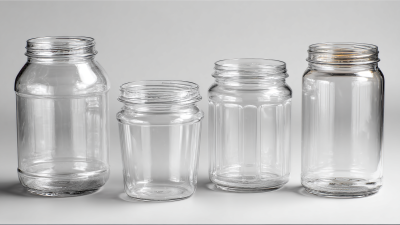
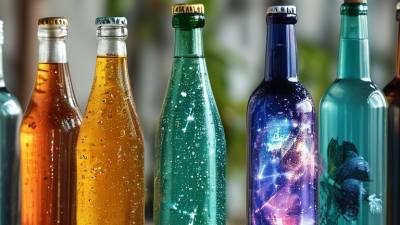
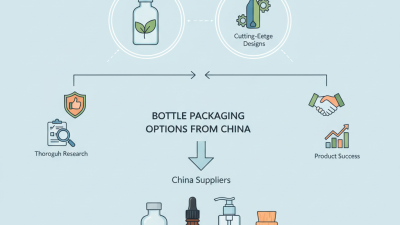
What Are the Top Pet Jars for Global Buyers?
Global buyers are asking a sharper question: which Pet Jars truly perform across products, markets, and supply chains? The answer is rarely based on appearance alone. A reliable jar must protect food, supplements, cosmetics, or household goods while remaining practical for filling, sealing, labeling, and transport.
Packaging specialist Lynn Dyer offers a useful principle: “Packaging must protect the product, support the process, and communicate value.” This idea applies directly to Pet Jars. Buyers should examine resin quality, wall thickness, neck finish, closure compatibility, and material transparency. A clear PET jar can display colorful contents beautifully. However, light-sensitive products may need tinting, an opaque design, or an additional protective layer. Small details matter.
Performance begins with the product inside. A wide-mouth jar may suit powders or large tablets, while a narrow opening can reduce exposure and improve portion control. The cap should close evenly and maintain a dependable seal. It should also feel comfortable in the customer’s hand. Not every attractive jar survives rough pallets, temperature changes, or repeated handling. That uncomfortable fact deserves attention.
Global sourcing adds another layer. Buyers need consistent samples, documented specifications, food-contact information where applicable, and realistic production timelines. Recyclability also matters, but claims should be checked against local collection systems. A recyclable Pet Jar is not automatically recycled everywhere. There is no universal winner. The best choice balances protection, cost, appearance, compliance, and customer experience. Sometimes, the first specification needs revision. That is not failure; it is responsible buying.
What Are PET Jars and Why Do Global Buyers Choose Them?
What Are PET Jars, and Why Do Global Buyers Choose Them?
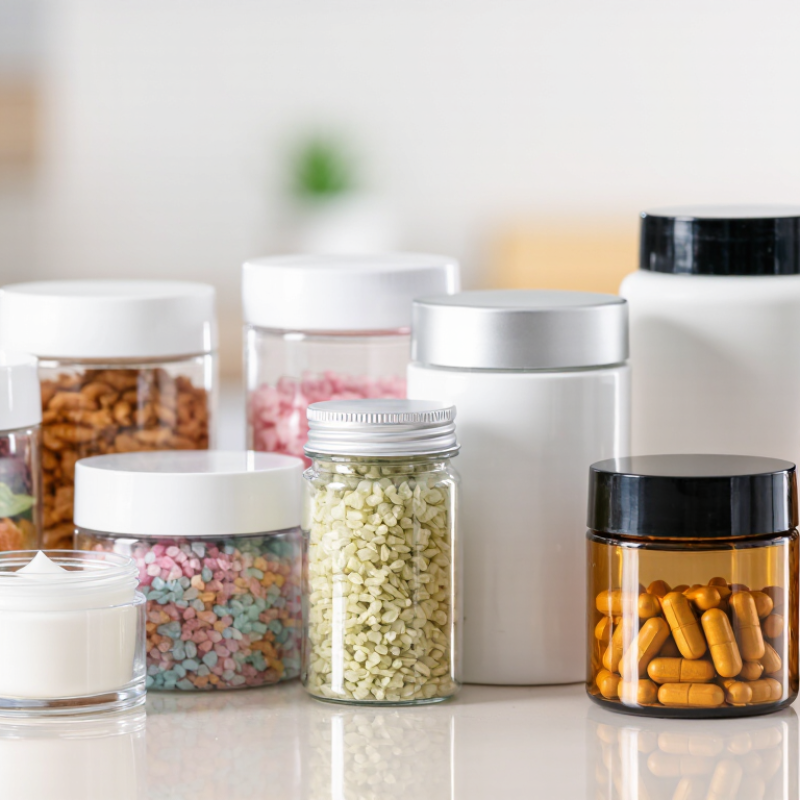
PET jars are rigid containers made from polyethylene terephthalate, a lightweight packaging plastic. They are commonly used for powders, creams, supplements, and dry foods. Their clear walls help buyers inspect fill levels and product color before opening. Their wide mouths also simplify filling, scooping, and cleaning.
Global buyers often select PET jars because they reduce transport weight and resist cracking during handling. This matters across long shipping routes and changing warehouse temperatures. The OECD’s Global Plastics Outlook reports that global plastic production reached 460 million tonnes in 2019. Packaging represented about 40% of plastic waste. These figures increase pressure to choose efficient, recyclable formats. PET can enter established recycling streams in many markets, but local collection systems differ. Recyclability is not automatic. That point is sometimes overlooked.
Tips:
Check resin identification, wall thickness, closure fit, and drop-test results. Request migration and food-contact documents when relevant. Compare jar weight with compression strength. A lighter jar may lower freight emissions, yet excessive thinness can cause dents or leaks. Test samples under realistic conditions, including heat, cold, stacking, and vibration. Clear PET looks premium, but it can expose light-sensitive contents. An opaque option may protect better, although it can reduce visual inspection. According to UNEP’s 2023 packaging guidance, reducing unnecessary material remains important. PET jars support that goal only when design, reuse potential, collection, and end-of-life planning are considered together.
How Should Buyers Compare PET Jar Quality and Performance?
When global buyers compare PET jars, they should inspect more than appearance. A polished surface can hide uneven walls, weak threads, or unstable dimensions. In packaging evaluations, I check the jar, closure, and filling process as one system. Measure wall thickness at several points, not only near the base. A 500-milliliter jar should remain balanced when filled and stacked. Small variations matter.
Buyers should request resin documentation, production specifications, and recent quality records. For food-contact applications, confirm suitable compliance documents for the destination market. Compare clarity, color consistency, odor, and recycled content declarations. Check the neck finish with the intended cap, because small mismatches can cause leaks. Use samples from different production lots. One sample proves little. A controlled comparison is stronger.
Performance testing should include drop resistance, leak testing, closure torque, and top-load strength. Test filled jars after storage, not only when they are new. Temperature changes can affect sealing and flexibility. Light-sensitive products may also require better protection or secondary packaging. I have seen attractive jars fail after repeated handling in a warehouse. That result is easy to overlook. No test is perfect. Buyers should record failures, repeat uncertain tests, and question specifications that seem unusually optimistic. A reliable supplier should explain test methods, tolerances, and corrective actions without hiding behind general claims.
What Global Standards Govern PET Jar Safety and Compliance?
Global PET jar safety has no single worldwide rule. Buyers must match the jar, contents, and destination market. Food-contact packaging commonly follows the U.S. FDA requirements in 21 CFR, including PET-related provisions. European buyers usually check Regulation (EC) No. 1935/2004, plastics Regulation (EU) No. 10/2011, and good manufacturing practices under Regulation (EC) No. 2023/2006. Other markets may apply national standards, import rules, or additional chemical restrictions.
The practical focus is migration testing. Laboratories should examine overall migration and specific substances under realistic time, temperature, and food-simulation conditions. Acidic sauces, oily foods, and hot filling can create different risks. PET jars also need checks for wall strength, drop resistance, closure fit, torque, and seal performance. Testing should come from a competent laboratory, preferably accredited to ISO/IEC 17025.
Documentation matters. Request the resin declaration, formulation details, recycled-content statement, test reports, batch traceability, and intended-use limits. A certificate alone is not enough. Suppliers should control colorants, additives, adhesives, and processing aids, including possible non-intentionally added substances. Cosmetic packaging may follow different product and chemical requirements, so assumptions can be costly.
Real procurement is rarely perfect. A test using water may not represent a fatty product. A compliant jar can still fail during transport. Recheck samples after tooling changes, supplier changes, or extended storage. Small details often decide whether a PET jar remains safe, functional, and acceptable across borders.
What Are the Top PET Jars for Global Buyers?
Selected EU specific migration limits for substances relevant to PET food-contact jars. Lower limits indicate stricter migration thresholds.
Global buyers should verify compliance with the destination market’s requirements, including EU Regulation (EU) No 10/2011, U.S. FDA 21 CFR §177.1630, China GB 4806.6, and applicable Japanese positive-list requirements. The values shown are selected EU specific migration limits expressed in mg/kg of food; they are not a complete compliance assessment.
How Can Buyers Evaluate Suppliers, Costs, and Sustainability?
What Are the Top Pet Jars for Global Buyers?
How Can Buyers Evaluate Suppliers, Costs, and Sustainability?
When comparing PET jars for global distribution, buyers should evaluate suppliers beyond attractive catalogs. Request factory details, production photos, quality certificates, and recent batch records. Do not rely on polished samples alone. Order several samples and test wall thickness, cap fit, leakage, drop resistance, and label adhesion. Ask how defects are recorded and corrected. Those answers reveal operational maturity.
Compare landed cost, not unit price. Include tooling, minimum order quantities, protective packaging, freight, duties, currency changes, and payment terms. A low quote can mislead. Confirm lead times and replacement policies in writing. I have seen buyers choose cheaper jars, then pay more after damaged cartons arrived. A small pilot order can expose weak packaging before full production.
Sustainability requires measurable evidence. Ask for recycled PET content records, material declarations, recycling guidance, and energy or waste data. PCR percentages need evidence. Lightweighting may reduce resin use, but thin walls can increase damage and product waste. Clear PET usually supports easier sorting, while labels, caps, and colorants can complicate recovery. My own evaluations have sometimes favored the lowest carbon figure too quickly. That was a mistake. Buyers should compare the complete package, including transport, durability, recycled content, and verified supplier practices.
What Are the Top PET Jars for Global Buyers? - How Can Buyers Evaluate Suppliers, Costs, and Sustainability?
| PET Jar Format |
Typical Capacity |
Typical Empty Weight |
Common Applications |
Indicative FOB Cost
USD/Unit* |
Typical MOQ |
Sustainability Profile |
Key Buyer Checks |
| 30–50 ml Mini Jar |
30–50 ml |
8–18 g |
Cosmetics, samples, travel-size creams, balms |
$0.05–$0.12 |
10,000–30,000 units |
Low material use; lightweight; generally recyclable where PET collection exists |
Wall consistency, leak resistance, closure fit, food or cosmetic-contact documentation |
| 60–100 ml Round Jar |
60–100 ml |
15–28 g |
Skin care, hair care, supplements, personal care |
$0.07–$0.15 |
10,000–30,000 units |
Good strength-to-weight ratio; clear PET can be sorted more easily than dark or heavily colored PET |
Neck finish, torque specification, inner liner, decoration compatibility, recycled-content option |
| 120–150 ml Wide-Mouth Jar |
120–150 ml |
25–42 g |
Creams, powders, confectionery, dry foods |
$0.10–$0.22 |
10,000–25,000 units |
Wide opening improves dispensing without requiring a separate scoop; avoid unnecessary multilayer structures |
Opening diameter, product compatibility, oxygen and moisture requirements, tamper evidence |
| 200–300 ml Straight-Side Jar |
200–300 ml |
40–75 g |
Body care, powders, snacks, household products |
$0.14–$0.30 |
8,000–20,000 units |
Suitable for lightweighting; clear or natural PET usually supports better sorting than opaque formats |
Stacking strength, drop testing, pallet efficiency, label removal, cap-material separation |
| 400–500 ml Large Jar |
400–500 ml |
70–120 g |
Nutrition powders, food ingredients, household and institutional products |
$0.25–$0.55 |
5,000–15,000 units |
Higher material demand per unit; lightweight design and recycled PET can materially reduce footprint |
Load-bearing performance, seal integrity, transport testing, recycled-content percentage, total delivered cost |
| Supplier Evaluation Dimension |
Recommended Benchmark |
Evidence Buyers Should Request |
Suggested Weight |
| Product Quality |
Consistent dimensions, weight, color, closure fit and sealing performance |
Pre-production samples, dimensional inspection report, leak-test results, drop-test results and agreed quality limits |
25% |
| Regulatory Compliance |
Documentation appropriate to the destination market and product category |
Food-contact or cosmetic-contact declaration, migration-test summary, material specification and traceability records |
20% |
| Cost Transparency |
Comparable quotation based on identical specifications and delivery terms |
Unit price, tooling, decoration, inner seal, carton packing, freight terms, payment terms and price-validity period |
20% |
| Sustainability |
Design for recycling, reduced material use and credible recycled-content claims |
Material composition, recycled-content certificate, mass-balance or chain-of-custody evidence where applicable, packaging-weight data and environmental policy |
15% |
| Supply Reliability |
Stable capacity, predictable lead times and documented corrective action |
Production capacity, historical on-time delivery data, backup resin sources, inspection plan and corrective-action procedure |
10% |
| Customization Capability |
Ability to meet required shape, finish, color, decoration and closure specifications |
Mold ownership terms, color samples, decoration samples, tooling timeline and change-control process |
10% |
Cost and sustainability notes: Indicative FOB prices are planning ranges for standard, unprinted PET jars and compatible closures at approximately 5,000–50,000 units. Actual prices vary by resin grade, jar weight, mold design, closure, decoration, order quantity, destination and freight conditions. PET is identified by resin code 1 and is widely recyclable, but actual recycling depends on local collection, sorting and reprocessing infrastructure. Clear or natural PET, compatible labels and easily separable closures generally support better recyclability than opaque, heavily pigmented or inseparable multilayer designs.
Reference basis: PET resin identification code 1; typical PET density approximately 1.38 g/cm³; supplier documentation should be checked against the applicable destination-market food-contact, cosmetic-contact, packaging-waste and recycled-content requirements. All figures should be validated through samples, current quotations and third-party testing before purchase.