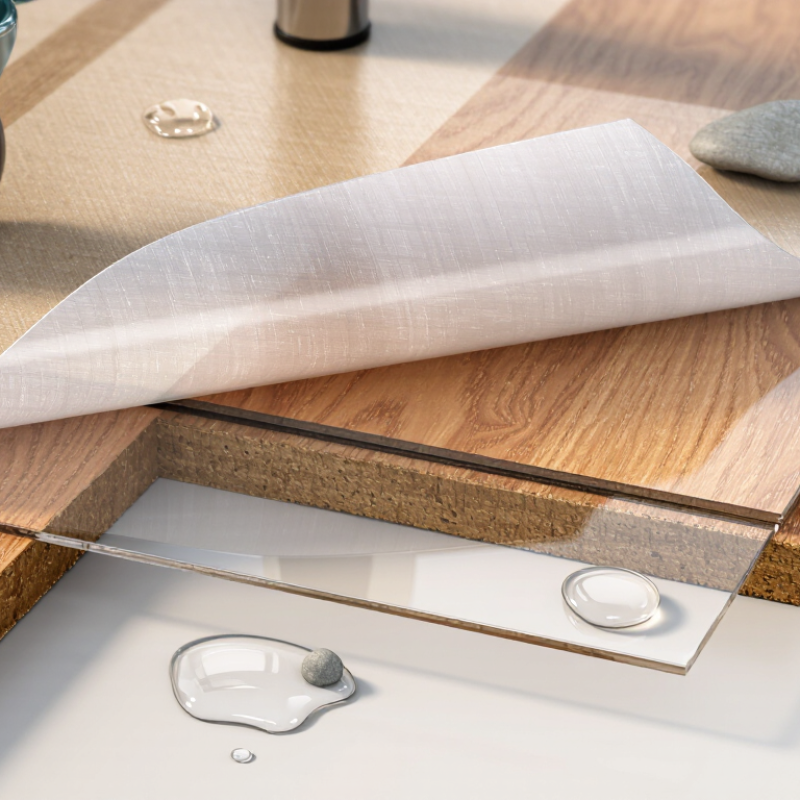
| Wear Layer Material | Transparent or translucent PVC, usually formulated as a flexible protective film | Creates a durable barrier above the printed design layer and helps reduce direct contact with dirt, footwear, and moving furniture. | Confirm that the wear layer is suitable for the expected traffic level and cleaning conditions. |
| Common Wear Layer Thickness | Approximately 0.10–1.00 mm | A thicker layer generally provides more material to resist gradual abrasion and helps preserve the appearance for longer under heavier use. | Thickness alone does not determine performance; formulation, surface finish, installation, and maintenance also matter. |
| Light Residential Use | Approximately 0.15–0.20 mm | Provides basic protection against normal household foot traffic, dust, and occasional furniture movement. | Suitable for bedrooms, low-traffic living areas, and similar spaces when the floor is properly maintained. |
| General Residential Use | Approximately 0.20–0.30 mm | Offers a stronger balance of scratch resistance, stain protection, and everyday durability. | A common choice for living rooms, hallways, dining areas, and family homes. |
| Commercial or Heavy Residential Use | Approximately 0.30–0.70 mm | Provides additional resistance to repeated foot traffic, rolling loads, and more frequent cleaning. | Consider this range for offices, retail areas, hospitality spaces, and busy residential zones. |
| Heavy Commercial Use | Approximately 0.70–1.00 mm | Offers a substantial protective layer for environments exposed to high traffic and demanding daily use. | Verify the complete flooring specification, including classification, dimensional stability, and installation requirements. |
| Abrasion Protection | Performance depends on thickness, PVC formulation, stabilizers, and surface treatment | Helps limit wear-through that could expose or distort the decorative print layer. | Use the manufacturer’s abrasion or wear-test results when comparing products; thickness is not a universal performance rating. |
| Scratch and Scuff Resistance | Improved by a suitable PVC formulation and protective topcoat | Reduces visible marks caused by footwear, chair legs, and light impacts during normal use. | Use non-staining furniture glides, lift furniture instead of dragging it, and place entrance mats in high-dirt areas. |
| Stain and Spill Protection | Non-porous surface when the flooring system is properly sealed and maintained | Helps prevent many common household and commercial spills from penetrating quickly into the design layer. | Remove spills promptly and follow the flooring manufacturer’s approved cleaning instructions. |
| Moisture Resistance | PVC itself has low water absorption, but seams and subfloor conditions remain important | Helps protect the surface from moisture-related staining during ordinary cleaning and short-term spills. | Water resistance does not make every installation waterproof; prepare the subfloor and treat seams according to the installation method. |
| UV and Light Exposure | Resistance varies; some products use additional UV-resistant surface treatments | Can help slow fading and surface degradation caused by sunlight and artificial lighting. | Use window coverings or UV-control glazing in areas with strong direct sunlight, and check the product’s light-resistance data. |
| Cleaning and Maintenance | Routine sweeping or vacuuming plus damp mopping with a compatible cleaner | Removing abrasive grit reduces the amount of friction acting on the PVC wear layer. | Avoid abrasive pads, harsh solvents, excessive water, and cleaning chemicals not approved for vinyl flooring. |
| Key Limitation | The wear layer is protective, not indestructible | Deep cuts, sharp impacts, prolonged abrasive contamination, and unsuitable chemicals can still damage the surface. | Select the thickness and product classification according to traffic, rolling loads, furniture type, sunlight, and maintenance practices. |